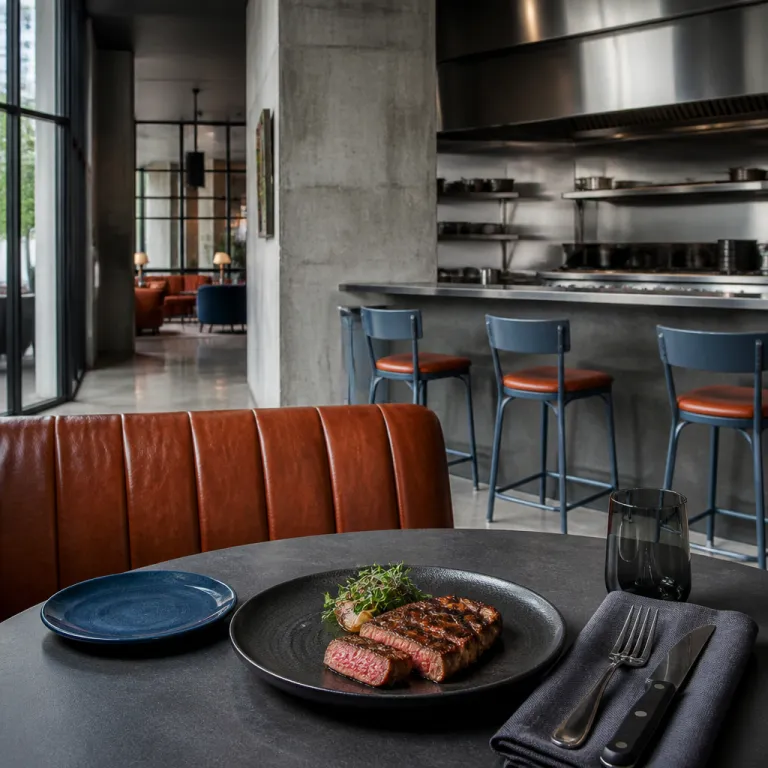
From standalone icon to portfolio asset: gaucho Liverpool in a hotel investment lens
Gaucho Liverpool is widely regarded as an Argentinian dining icon within the city’s historic commercial district. For hotel investors and directeurs financiers, the strategic question is how a potential Gaucho Liverpool hotel chain affiliation could convert this restaurant brand equity into a scalable asset class over time. In practice, the way the Gaucho concept works inside Liverpool’s premium dining scene offers a straight template for structuring future hotel food and beverage partnerships.
The restaurant operates from a renovated heritage building at 7 Water Street in Liverpool’s central business district, and this physical context matters for asset managers who evaluate repositioning scenarios. When a premium Argentinian concept such as Gaucho is inserted into a character property, the head office can leverage both the age of the building and the modern fit out to justify higher rent or revenue share, which will directly influence hotel valuation models. Over time, the same logic can support a full pipeline of mixed use projects where a hotel, a branded restaurant and event spaces are set under one capital structure.
For banks and funds, any Gaucho Liverpool hotel tie-up is not only a branding question but a covenant question. A chain backed by around twenty locations in the United Kingdom, as reported in Gaucho’s own group materials, offers a different risk profile than a single site operator, and this will shape the cost of capital and the tenor of debt. Investors who remember earlier cycles know that resilient restaurant covenants often stabilise hospitality portfolios during downturns, especially when the concept can trade strongly at lunch, pre theatre and late evening across the full week.
Soft brand logic applied to restaurant chains: lessons for hotel F&B
Hotel groups have spent years refining soft brand strategies, and the same logic can now be applied to restaurant chains such as Gaucho. When financiers analyse a Gaucho Liverpool hotel partnership, they should think in terms of a restaurant soft brand that plugs into multiple hotel flags while preserving its Argentinian identity. This mirrors how soft brand collections in lodging allow a property to keep its local character while benefiting from central distribution and loyalty platforms.
For directeurs financiers evaluating whether a Gaucho affiliation should sit alongside a major hotel soft brand, the key is alignment of guest segments and price positioning. Gaucho Liverpool targets a premium clientele willing to pay for high quality Argentinian beef and wine, which fits naturally with upper upscale and luxury hotels seeking to lift average daily rate and total revenue per available room. In this context, a Gaucho Liverpool hotel link can be structured as a three way relationship between the hotel owner, the hotel brand and the restaurant group, with carefully set performance KPIs for each party.
Soft brand competition in hotels is intense, and the same will be true for restaurant partners that aspire to become an icon within a hotel’s F&B mix. A useful benchmark for investors assessing this landscape is the analysis of the soft brand shelf and how different collections compete for owner attention, as discussed in this reference on soft brand positioning for hotel owners. When a hotel asset manager brings Gaucho into the building, the restaurant’s own brand equity must complement, not dilute, the hotel’s chosen soft brand narrative.
Revenue models and payment flows in a gaucho Liverpool hotel partnership
Structuring payment flows is where a Gaucho Liverpool hotel relationship becomes a technical finance topic rather than a simple branding exercise. Owners, banks and fintech travel players need clear visibility on how revenue from lunch, dinner and private events is recognised, settled and reported. The choice between a fixed rent, a turnover based lease or a full management agreement will determine how risk and upside are shared.
In a turnover lease, Gaucho as tenant pays a base rent plus a percentage of gross revenue, which can be attractive for lenders when the restaurant already trades strongly in Liverpool as a destination for Argentinian steak. Payment processors and fintech travel partners can then integrate restaurant charges into room folios, enabling guests to settle a full stay and F&B spend in one transaction, which improves cash flow predictability for the hotel and the restaurant. Over time, this integration allows the finance team to analyse spend by segment, time of day and channel, and to refine pricing for premium cuts, wine pairings and set lunch menus.
Where Gaucho operates under a management agreement inside a hotel, the owner retains revenue and pays a management fee to the chain, which changes how EBITDA is modelled. In this case, a Gaucho Liverpool hotel tie-up means the brand’s head office and the hotel’s finance équipe must align on chart of accounts, payment gateways and PCI compliance, so that card transactions and digital wallets are reconciled straight into the hotel’s general ledger. Such alignment is essential when three or more entities share the same point of sale infrastructure and when banks require clean, auditable data to underwrite refinancing.
Capex, ESG and the value of sustainable Argentinian sourcing
Capital expenditure decisions around a Gaucho style restaurant inside a hotel are no longer limited to kitchen equipment and fit out. Investors now scrutinise how sustainable sourcing, such as carbon neutral Argentinian beef, can support both pricing power and asset valuation. When a Gaucho Liverpool hotel collaboration is on the table, the ESG profile of the restaurant becomes part of the hotel’s overall investment thesis.
Gaucho Liverpool operates with modern kitchen technology and a focus on responsible sourcing, which can reduce long term operating costs while supporting a premium positioning. For hotel asset managers, this means that initial capex on energy efficient equipment and traceable supply chains may be higher, but the payback period can be justified through higher average check, stronger group demand and better retention of corporate clients. Over time, such works on the F&B side can also support green financing instruments, as banks increasingly link margin to measurable sustainability KPIs.
ESG conscious guests will remember which brands take sustainability seriously, and this memory has a direct impact on repeat business and loyalty metrics. When a hotel aligns with a restaurant chain that treats Argentinian sourcing as a strategic head topic rather than a marketing slogan, the combined asset can command a valuation premium. In this sense, a Gaucho Liverpool hotel partnership is not only about the immediate P&L contribution from lunch and dinner, but also about the long term multiple applied to the hotel’s full cash flow.
Operational synergies, staffing and the role of the Liverpool market
Operationally, the success of any Gaucho Liverpool hotel arrangement will depend on how well the restaurant équipe and the hotel team work together. Cross training between front office staff and restaurant hosts can streamline guest journeys, while shared back office functions reduce overhead. For directeurs financiers, these synergies translate into measurable margin improvement and lower volatility in payroll costs over time.
Liverpool is a dynamic regional capital with a strong events calendar, and this creates natural demand spikes for premium dining. When a hotel partners with Gaucho Liverpool, it can package rooms with Argentinian steakhouse experiences, pre concert set menus or corporate lunch offers, which helps smooth occupancy and F&B utilisation across the week. Such packaging works particularly well when the hotel’s sales head coordinates closely with the restaurant’s marketing team to target three core segments : corporate, leisure and local residents.
Staffing remains a structural challenge, especially as the workforce age profile shifts and competition for qualified chefs and servers intensifies. A recognised chain such as Gaucho can attract talent who value training and career progression, which in turn stabilises service quality for hotel guests. Investors should remember that a good restaurant partner in Liverpool is not only a tenant or operator, but also a human capital engine that supports the hotel’s full guest experience.
Risk management, scenario planning and when to outsource or reimagine
Even with a strong brand like Gaucho, hotel owners must treat F&B as a strategic risk area. Any Gaucho Liverpool hotel collaboration should be tested under multiple scenarios, including shifts in local demand, changes in Argentinian beef supply and evolving payment preferences. Banks and funds will expect clear contingency plans that address what happens if turnover falls below agreed thresholds or if the restaurant needs to pivot its concept.
For some assets, a full outsourcing model with a chain such as Gaucho will be the right answer, while for others a hybrid or owner operated solution may deliver better long term value. A detailed benchmarking of hotel F&B performance, including when to outsource, when to reimagine and when to shut down underperforming outlets, is explored in depth in this analysis on benchmarking hotel F&B strategies. In every case, the finance équipe should model three clear paths : maintain the current partner, re tender to another chain, or internalise operations with a new concept.
One practical advantage of working with a chain is the ability to replicate what already works in Liverpool across other cities, reducing concept risk for investors. However, directeurs financiers must still negotiate straight covenants, step in rights and performance tests that protect the asset if the operator underperforms. As the Gaucho group itself states in its own materials, "Is Gaucho Liverpool part of a chain? Yes, it's part of the Gaucho restaurant group." and this chain status is precisely what allows sophisticated capital to underwrite the brand as part of a diversified hospitality portfolio.
Key figures for gaucho Liverpool and chain affiliated F&B investments
- The Gaucho group operates around 20 locations in the United Kingdom, which gives lenders and investors a chain level performance history rather than relying on a single site in Liverpool.
- Gaucho Liverpool is located at 7 Water Street in the city’s central business district, a micro market where hotel room rates and premium restaurant checks both benefit from strong corporate and leisure demand.
- The restaurant’s positioning around Argentinian steak and wine supports higher average spend per guest, which can materially lift total revenue per available room when integrated into a hotel partnership model.
- Renovation of historic buildings for F&B concepts such as Gaucho typically represents a significant share of initial capex, but investors can amortise this over long leases or management agreements aligned with the asset’s holding period.
- Carbon neutral beef sourcing and other ESG initiatives can unlock access to sustainability linked financing, where banks adjust loan margins based on measurable environmental performance indicators.
FAQ about gaucho Liverpool and hotel chain affiliation strategies
Is Gaucho Liverpool part of a wider restaurant chain ?
Gaucho Liverpool is part of the Gaucho restaurant group, which operates multiple Argentinian steakhouses across the United Kingdom. This chain affiliation provides brand recognition, centralised procurement and operational standards that are valuable for hotel partners. For investors, the presence of a chain level covenant can reduce perceived risk compared with an independent operator.
How could a hotel structure a commercial agreement with Gaucho Liverpool ?
A hotel can work with Gaucho under several models, including a fixed rent lease, a turnover based lease or a management agreement where the owner retains revenue and pays a fee. The optimal structure depends on the hotel’s risk appetite, financing terms and desired control over the guest experience. Directeurs financiers should model each option’s impact on EBITDA, cash flow volatility and valuation multiples.
What are the main financial benefits of partnering with a premium Argentinian restaurant ?
Partnering with a premium Argentinian steakhouse such as Gaucho can increase total revenue per available room by attracting local diners, corporate groups and hotel guests to a single F&B hub. The brand’s reputation helps drive higher average checks at lunch and dinner, while private events generate incremental income. These effects can support higher asset valuations and more attractive financing conditions.
How does ESG influence investment decisions in restaurant hotel partnerships ?
ESG considerations now play a central role in hospitality investment decisions, including restaurant partnerships. When a chain such as Gaucho commits to carbon neutral beef sourcing and energy efficient operations, it strengthens the hotel’s overall sustainability profile. This can unlock access to green loans, sustainability linked bonds and institutional capital with ESG mandates.
What should banks and funds look for when underwriting a hotel with a Gaucho affiliation ?
Banks and funds should analyse the strength of the Gaucho covenant, historical performance across the chain and the specific trading dynamics of the Liverpool market. They also need clarity on lease terms, break clauses, performance tests and integration of payment systems between the hotel and the restaurant. A robust scenario analysis should test how the asset performs under different demand, cost and ESG assumptions.