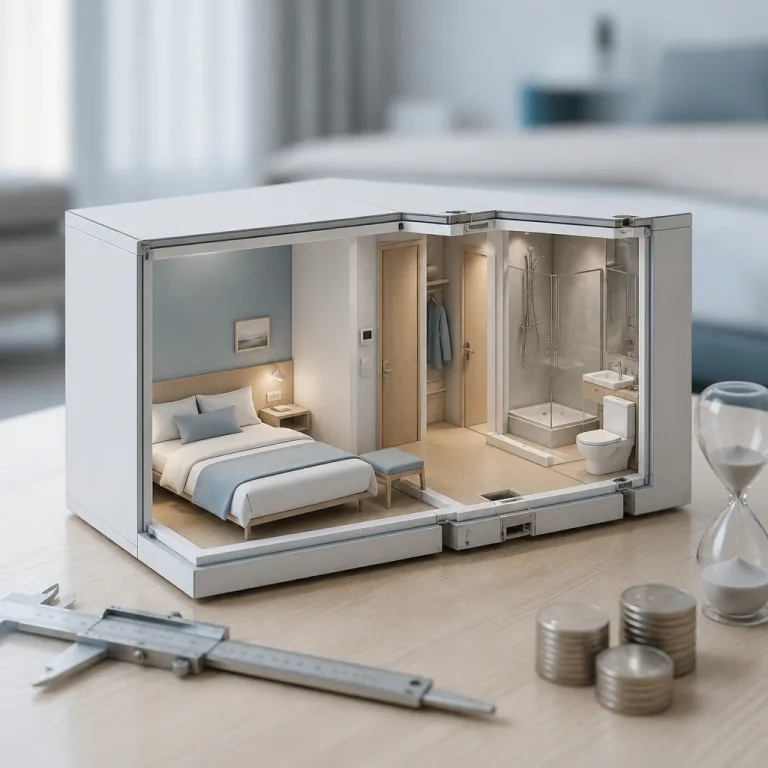
Where modular fits in the current hotel development cycle
Modular hotel construction sits at the intersection of a swollen pipeline and constrained labor markets. With the United States hotel construction pipeline at 6,020 hotel projects and 705,825 rooms, owners are searching for any credible way to de risk timelines and protect underwriting. That pressure is especially visible in segments where suites and compact rooms dominate, and where a repeatable room hotel layout makes modular viable.
Across global hospitality markets, developers are testing modular for both new development and selective conversion plays. The strongest traction appears in midscale and upper midscale hotels resorts, particularly extended stay flags and roadside select service assets where standardized rooms and limited public areas simplify the development process. Luxury resorts and resort spa concepts are experimenting too, but the record 102 luxury projects with 25,527 rooms still rely mostly on conventional hotel construction because bespoke suites and complex back of house areas are harder to modularize.
For finance leaders, the main content of the modular debate is not architectural novelty but capital efficiency. Modular promises up to 40 % faster delivery and around 20 % cost savings, yet the realized gains depend heavily on brand standards, site logistics, and lender comfort. Asset managers evaluating hospitality investment opportunities must therefore segment their hotel projects by chain scale, from a standardized inn express or residence inn to a full service beach resort, and align each project’s construction method with its NOI profile and exit strategy.
What the cost per key really looks like in modular hotel projects
On paper, modular hotel development offers compelling cost per key advantages, but the savings are not where many pitch decks suggest. Data from prefabrication specialists indicates that modular can reduce overall construction costs by approximately 20 %, yet most of that benefit comes from site labor and preliminaries rather than cheaper materials. Developers still pay market rates for finishes in suites, corridors, and public rooms, and premium hotel brands often push specifications higher.
When you break down a typical midscale extended stay project, modular tends to lower the direct labor component and shorten the duration of interest carry. A 120 room hotel with a standardized room hotel module might see hard cost savings of 5–10 % per key, but the more material gain comes from shaving several months off the construction schedule and reducing general conditions. That is why serious underwriting models treat modular as a financing and risk management tool within hospitality investment, not just a construction tactic.
Cost dynamics shift again in full service hotels and resorts where complex F&B, meeting spaces, and resort spa facilities remain largely site built. Here, modular often covers only the guestrooms and some back of house areas, while the podium and amenities follow traditional hotel construction methods. For investors comparing new build versus acquisition, a detailed hotel replacement cost analysis can clarify when building modular still costs more than buying an existing hotel or inn, especially in markets where cap rates on stabilized hotels resorts remain attractive relative to all in development cost.
Timeline, speed, and the reality behind the 40 % promise
Marketing decks for modular hotel development frequently promise 30–50 % faster delivery, but completed projects show a more nuanced pattern. In practice, well executed modular hotels tend to be up to 40 % faster than traditional methods, with the biggest gains realized when off site fabrication and on site foundation work run in parallel. The critical path shifts from vertical construction to early design coordination, procurement, and factory scheduling.
Developers who treat modular as a plug and play solution usually lose much of the theoretical time advantage. The development process demands earlier locking of room layouts, MEP routing, and brand approvals, particularly for international hotel brands with strict prototype standards. When those decisions slip, the factory cannot start building modules, and the crane on site waits while interest on land and predevelopment loans continues to accrue.
Case studies from roadside select service assets and extended stay hotels in the United States show the most reliable time savings. A modular inn express or similar express select service flag can often open several months earlier than a comparable stick built hotel, especially when suites and standard rooms share identical modules. That acceleration matters for lenders and equity partners because it pulls forward cash flow, shortens the lease up period, and reduces exposure to construction cost inflation, which is why institutional investors now study modular timelines as closely as they study strategic motel acquisitions in dense urban submarkets.
Quality, design limits, and where modular works best
Quality concerns used to be the main objection to modular hotel construction, yet recent data tells a different story. Independent research on prefabricated and modular methods indicates that they can improve quality by up to 80 %, largely because repetitive factory processes reduce on site variability. For hotel brands that rely on consistent rooms and suites across portfolios, that level of control can be a powerful asset.
There are, however, real design constraints that limit where modular fits within global hospitality. Highly customized luxury resorts, intricate resort spa layouts, and irregular beach resort sites often demand bespoke structures that do not align with standardized modules. In contrast, midscale extended stay hotels, roadside inn style properties, and compact urban hotels with stacked room hotel layouts are natural candidates, especially when the brand’s prototype already favors efficient rectangular footprints.
Segments such as residence inn style extended stay, inn express type select service, and branded holiday inn business hotels have therefore become early adopters. These hotels typically feature standardized rooms, limited F&B, and predictable back of house requirements, which align well with modular’s strengths. For asset managers overseeing a collection of hotels resorts under different hotel brands, the strategic move is to explore brands and flags where modular can be rolled out programmatically, creating a repeatable playbook rather than a one off experiment.
Financing structures, lien complexity, and risk allocation in modular builds
Financing modular hotel development introduces structural questions that many banks and funds are still learning to underwrite. Traditional construction loans assume that most value is created on site, whereas modular shifts a significant portion of collateral into factories and transport, raising questions about lien priority and security interests. Lenders must be comfortable that prefabricated modules in transit or stored off site can be perfected as collateral and integrated into existing mortgage and security packages.
For Directeurs financiers and asset managers, this means engaging lenders early and structuring clear agreements with modular construction companies, architects, and suppliers. The actors in a modular project — developers as initiators, modular builders as fabricators, and hotel brands as operators — must align on payment milestones that reflect off site fabrication progress without overexposing the owner to factory risk. That alignment becomes even more critical in cross border hospitality investment where international shipping, customs, and currency exposure add layers of complexity.
From a portfolio perspective, modular can still be a powerful lever in a greater development and conversion strategy. Owners with a mix of full service hotels, extended stay assets, and select service roadside inns can deploy modular selectively, using it where standardized rooms and suites dominate while keeping traditional methods for complex resort spa or beach resort projects. Over time, the most sophisticated groups will treat modular as one tool in a broader capital allocation toolkit, much like they evaluate branded platforms that turn existing hotels into resilient investment vehicles or benchmark replacement cost when deciding whether to build new or buy existing assets.
FAQ
What is modular hotel construction ?
Modular hotel construction means building hotels using prefabricated modules that are manufactured off site and then assembled on site with cranes. This approach allows rooms and suites to be completed in factory conditions before being stacked and connected at the hotel site. For investors, the method changes both the development process and the risk profile of hotel projects.
How much faster is modular hotel construction compared with traditional builds ?
Completed modular hotel projects typically achieve up to 40 % faster delivery than comparable stick built hotels when design and procurement are well coordinated. The main time savings come from overlapping off site fabrication with on site foundation and infrastructure work. This acceleration can reduce interest carry, bring forward opening dates, and improve overall project ROI.
Are modular hotels cost effective for investors ?
Modular hotels can reduce total construction costs by around 20 %, primarily through lower site labor and shorter project duration rather than cheaper materials. These savings are most reliable in standardized midscale and extended stay segments where room hotel layouts are repetitive. Investors still need detailed pro forma analysis by segment, because complex full service resorts may capture less benefit from modular methods.
Do modular hotels maintain or improve quality standards ?
Evidence from the construction sector shows that modular and prefabricated methods often improve quality by up to 80 % thanks to controlled factory environments and repeatable processes. For hotel brands that require consistent rooms and suites across multiple hotels, this can reduce defects and post opening maintenance. Asset managers should still insist on rigorous factory QA protocols and brand oversight during module production.
Which hotel segments are best suited to modular construction ?
Modular construction works best for midscale select service, extended stay, and standardized roadside inns where guestrooms and corridors follow repeatable patterns. Segments such as residence inn style properties, inn express type hotels, and many holiday inn business hotels fit this profile. Highly customized luxury resorts, complex resort spa layouts, and irregular beach resort sites are generally less suited to fully modular structures, though hybrid approaches are possible.