Hotel historic conversion underwriting in a no‑new‑build cycle
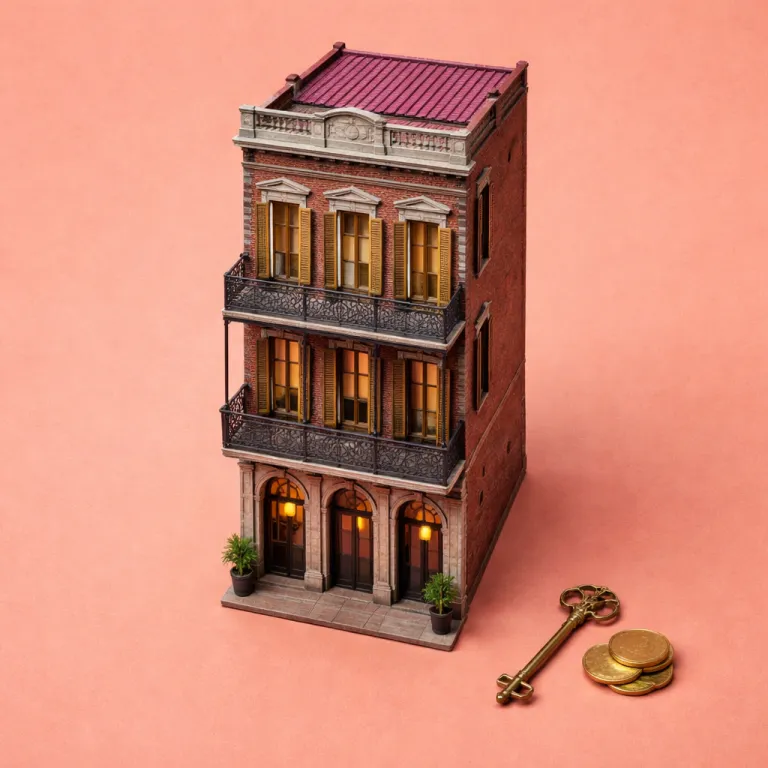
Sam Nazarian’s 34 key Monarch on St. Charles Avenue looks small, but for hotel historic conversion underwriting it reads like a forward curve for hospitality capital. With new hotel construction uneconomic across many US markets and the national construction pipeline essentially flat, underwriting desks are pivoting from classic hotel development to adaptive reuse of historic properties where basis per key can beat replacement cost. For chief financial officers and asset managers, the question is no longer whether to consider hotel conversions, but how to structure financing so that cash flow, loan covenants and long term value creation align.
The Monarch sits in a mid nineteenth century four story property, converted under SBE’s HQ Hotels & Residences boutique hotel brand in partnership with Wyndham, which gives it soft brand distribution without full service franchise capital intensity. That structure matters for hotel financing, because lower development costs and a lighter property improvement plan reduce total project costs and improve the probability that average daily rate and revenue per room will support the required debt yield. In this cycle, credit committees evaluating historic hotel conversion deals focus less on glossy design and more on whether the business can sustain resilient occupancy and daily rate premiums against STR competitive sets in volatile urban markets.
Across the US, investors are reallocating capital from ground up hotel construction projects to hotel conversions that can open faster and capture business travel and leisure demand with less entitlement risk. Historic properties in walkable districts often command higher hotel performance on both occupancy and average daily rate, especially when positioned as lifestyle or extended stay hybrids that blur traditional hotel brands categories. For banks and fintech travel lenders, that means hotel financing committees are recalibrating risk models to reflect adaptive reuse hotel underwriting, where construction risk is lower but regulatory and structural risks around heritage preservation and building codes are higher.
Unit economics of a 34 key historic conversion
Industry benchmarks for hotel historic conversion underwriting suggest an average conversion cost per room of about 150 000 USD, which places a 34 key project like the Monarch at roughly 5,1 million USD before financing costs. On that basis, a senior loan sized at 55 to 60 percent loan to cost implies 2,8 to 3,1 million USD of debt, with the balance funded by equity or preferred capital that expects a clear path to cash flow stabilization. With average occupancy post conversion around 75 percent and RevPAR near 120 USD in comparable markets, the underwriting model must show that revenue per room can absorb both operating costs and rising interest expense while still delivering acceptable returns.
For boutique hotels in historic properties, the underwriting hinge is the achievable daily rate uplift relative to nearby hotels of similar scale and service level. A soft brand partnership such as HQ Hotels & Residences with Wyndham can support higher average daily rate through loyalty and distribution, without imposing the full service brand’s more onerous property improvement standards and associated development costs. That difference in required capital expenditure can move the equity internal rate of return by several hundred basis points over the asset’s long term hold period, especially when business travel demand and event driven occupancy spikes are captured efficiently.
On the cost side, adaptive reuse projects compress the construction timeline versus ground up hotel construction, but they introduce specific risks that must be priced into hotel historic conversion underwriting. Structural surprises, code upgrades and preservation requirements can push total costs well above initial construction budgets, so lenders now require more detailed development contingency lines and third party reviews. As one industry reference notes, “Average conversion cost per room 150000 USD source STR, US Hotel Performance and Conversion Benchmarks, 2023, Exhibit 4 ; Average occupancy rate post-conversion 75 % source STR, Historic Property RevPAR and Occupancy Trends, 2022, Table 2 ; Average revenue per available room (RevPAR) 120 USD source STR, US Boutique and Lifestyle Hotel Benchmarks, 2023, Figure 6”, and those figures increasingly anchor credit committee discussions for hotel projects of this type.
| Core underwriting assumption | Base case value |
|---|---|
| Conversion cost per room | 150 000 USD |
| Stabilized occupancy | 75 % |
| RevPAR at stabilization | 120 USD |
| Loan to cost ratio | 55–60 % |
| Scenario | ADR / Occupancy | Implied margin | Interest rate | DSCR |
|---|---|---|---|---|
| Base case | ADR at benchmark, occupancy 75 % | Operating margin ~35 % | Interest cost ~6 % | ≈ 1,40x |
| Downside | ADR −10 %, occupancy −5 pts | Operating margin ~32 % | Interest cost ~6 % | ≈ 1,15x |
| Upside | ADR +10 %, occupancy +5 pts | Operating margin ~38 % | Interest cost ~6 % | ≈ 1,65x |
Using these inputs, a simple sensitivity test shows how fragile or resilient the business plan is. If average daily rate moves ±10 percent and occupancy shifts ±5 percentage points around the base case, total room revenue can swing by roughly 15 to 20 percent, which directly affects debt service coverage and equity returns. For example, assuming operating margins and interest costs are unchanged, a downside case with ADR at −10 percent and occupancy at −5 percentage points can reduce the debt service coverage ratio from about 1,40x to roughly 1,15x and compress equity internal rate of return from the mid teens to around 10 percent, while an upside case with ADR at +10 percent and occupancy at +5 percentage points can lift coverage to about 1,65x and push equity returns toward the high teens.
Soft brands, pipeline signals and the next wave of conversions
The SBE and Wyndham HQ platform illustrates why soft brand structures are becoming the default for hotel historic conversion underwriting in the boutique segment. Owners of historic properties gain access to a global reservations system and loyalty base, while retaining flexibility on F&B concepts and operational programming that drive hotel performance and non room revenue. For lenders, that combination of brand support and entrepreneurial control can de risk hotel financing, provided the management agreement and franchise terms protect cash flow waterfalls and allow for future repositioning.
For Wyndham, the HQ Hotels & Residences alliance fills a gap versus Marriott’s Autograph Collection and Hilton’s Curio Collection, particularly in secondary markets where lifestyle hotel brands can unlock latent demand. The Monarch’s scale and positioning show how a small property can still function as an institutional quality real estate asset when underwriting is disciplined around market data, STR benchmarks and realistic business plans. If the asset hits its targeted occupancy and daily rate, it will validate a template that can be replicated across 50 to 100 similar hotel conversions in the next investment cycle, especially where hotel construction pipelines remain constrained.
Pipeline data from sources such as Lodging Econometrics, US Construction Pipeline Trend Report, 2023, Section 3, and Hotel Dive, Brand Conversion and Adaptive Reuse Tracker, 2022, Q4 summary, already point to record levels of brand conversions and modest net supply growth in US hotels, which structurally supports pricing power for well executed projects. For chief financial officers and banks, that means hotel historic conversion underwriting should explicitly compare adaptive reuse scenarios against hypothetical new build hotel development, including land cost, entitlement risk and time to revenue. In many urban markets, the numbers now favor conversion projects that can open sooner, capture business travel and leisure demand, and generate stable cash flow while preserving culturally significant buildings.
Key quantitative benchmarks for hotel historic conversion underwriting
- Average conversion cost per room is approximately 150 000 USD for historic hotel projects, based on recent industry reports and aggregated deal data from STR, US Hotel Performance and Conversion Benchmarks, 2023, Exhibit 4.
- Average occupancy rate after a successful historic conversion typically stabilizes around 75 percent according to aggregated hotel performance data and STR trend summaries in Historic Property RevPAR and Occupancy Trends, 2022, Table 2.
- Average revenue per available room for converted historic hotels is about 120 USD, using current hospitality industry benchmarks and RevPAR indices for comparable assets reported in STR, US Boutique and Lifestyle Hotel Benchmarks, 2023, Figure 6.
- Typical project timelines for hotel historic conversions range from 18 to 36 months from feasibility study to operational opening, depending on complexity and local approvals, as summarized in Lodging Econometrics, Adaptive Reuse and Conversion Pipeline Overview, 2023, Section 2.
Key questions for hotel historic conversion underwriting
What are the main challenges in hotel historic conversions ?
The main challenges in hotel historic conversions are regulatory compliance, high renovation costs, and structural limitations. These factors must be fully reflected in both development costs and contingency assumptions during underwriting.
How long does a typical hotel historic conversion take ?
Timelines vary ; typically 18-36 months depending on project complexity. Lenders and investors should align loan structures and interest reserves with this expected duration.
Are there financial incentives for converting historic buildings into hotels ?
Yes, tax credits and grants are often available for such projects. These incentives can materially improve project cash flow and reduce required sponsor equity.
How do historic conversions impact local communities ?
They can boost tourism, create jobs, and preserve cultural heritage. For municipalities, successful hotel conversions often catalyse broader urban development and real estate reinvestment.
What factors influence the success of a hotel historic conversion ?
Market demand, location, financial planning, and effective project management. Robust hotel historic conversion underwriting must integrate all four dimensions before capital is committed.
Suggested sources for further reading : Hotel Dive, Lodging Econometrics, STR (for example, recent US pipeline summaries, brand conversion reports and RevPAR trend analyses that document the benchmarks cited above).
