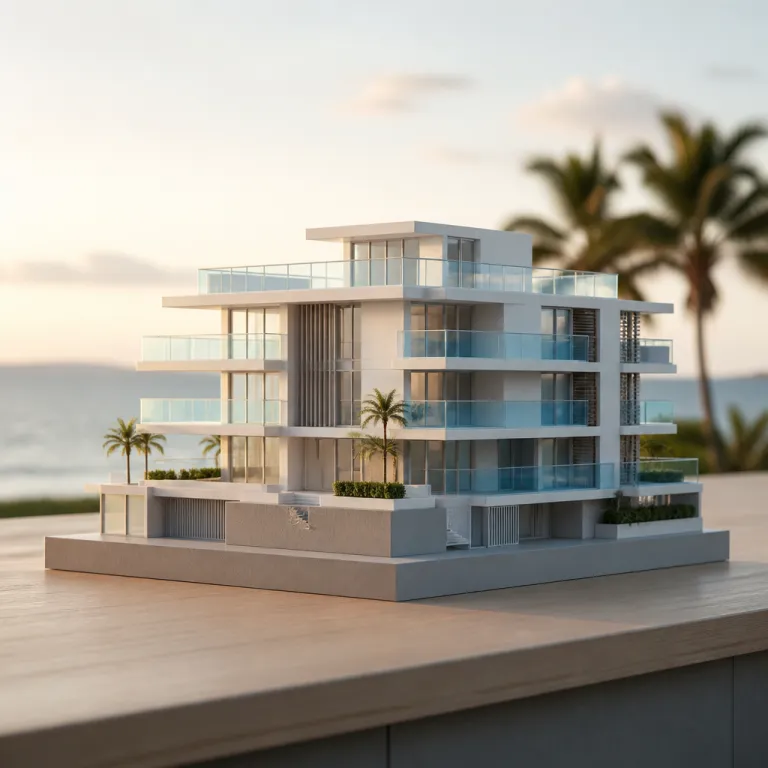
Positioning the ocean resort residences within a mixed use hotel investment thesis
The ocean resort residences in Fort Lauderdale sit at the intersection of luxury hotel operations and branded real estate investment. For directeurs financiers and asset managers, this hybrid between resort residences and traditional hotel inventory creates a differentiated cash flow profile that can stabilise principal and interest over the full investment cycle. In a market where south Florida oceanfront property is constrained, the tower on Fort Lauderdale Beach Boulevard is frequently cited by local brokers as combining rare scale, an international brand affiliation and direct beach frontage.
Publicly available marketing materials describe the asset as operating under a condo hotel structure, with several hundred fully furnished units spread across a high rise tower, blending individually owned residences with hotel managed resort inventory. Because exact unit counts, floor numbers and the detailed nature of the Conrad management agreement can evolve over time, investors should verify the latest disclosures in offering memoranda, county property records and current brand documentation. Recent broker opinion of value reports and sales registries indicate that this type of structure allows investors to arbitrage between sale and rent strategies, capturing development margin on initial real estate sales while preserving recurring hospitality income from the rental programme. Located on Lauderdale Beach’s so called Millionaire’s Row, the property typically trades at a premium price per square metre compared with non oceanfront sites in Fort Lauderdale and Palm Beach, as evidenced by recent deed recordings and MLS data.
For institutional investors used to underwriting pure hotel assets, the ocean resort residences require a shift in underwriting terms and service assumptions. Revenue streams must be segmented between hotel operations, rental pool distributions to individual residence owners and association fees linked to shared areas such as the beach club and spa. This segmentation, when modelled correctly, can reduce volatility in net operating income and improve long term asset resilience against seasonal shocks on the ocean resort market. In practice, this means building separate cash flow schedules for hotel keys, condo residences and common area cost recovery, then reconciling them into a consolidated investment thesis supported by sensitivity analysis and independent valuation reports.
Structuring capital stacks for condo hotel resort residences
Financing the ocean resort residences demands a capital stack that recognises both real estate development risk and ongoing hospitality performance risk. Senior lenders in Fort Lauderdale and wider south Florida typically require pre sales of a significant share of the residences before releasing full construction tranches, often targeting thresholds in the 50–60% range according to recent loan term sheets, which directly influences the achievable price per unit. Equity sponsors therefore need a clear strategy for balancing early sale rent incentives with the long term value of retaining inventory in the rental pool.
Because the tower is marketed in affiliation with Conrad Fort Lauderdale Beach, the brand covenant supports lender confidence and can compress margins on senior debt. The presence of Conrad Fort as an operating partner also enhances underwriting assumptions for average daily rate and occupancy across both hotel keys and resort residences participating in the rental programme. For investors comparing this structure with other branded residences such as the Ritz Carlton or residences Conrad projects in Palm Beach, the key differentiator lies in the depth of leisure demand on Lauderdale Beach and the strength of Fort Lauderdale’s cruise and airlift infrastructure, which together underpin year round visitation and support institutional grade underwriting.
Co investment with local capital can further de risk exposure to construction cost inflation and regulatory changes on the oceanfront. Structures inspired by community driven investment strategies, as analysed in specialist research on hotel chain affiliation and community capital, can be adapted to bring regional family offices into the ownership of selected units. This approach aligns interests between global funds, local owners of residences and the operating company, while preserving governance clarity through robust terms of service and clearly drafted co investment agreements for all stakeholders. In recent south Florida transactions documented in broker research notes, such alignment has also helped accelerate municipal approvals and neighbourhood support.
Revenue engineering across hotel, rental pool and real estate cycles
At the ocean resort residences, revenue engineering goes beyond classic hotel key performance indicators and extends into real estate capital gains. Each property within the tower can generate three layers of return for investors, combining operating cash flow from the rental pool, appreciation of the underlying real estate and fee income from ancillary services such as the beach club. This multi dimensional profile requires directeurs financiers to model scenarios across at least two full market cycles on the Lauderdale Beach and wider south Florida resort markets, using historical ADR, occupancy and transaction data from broker and STR style benchmarking reports.
Participation in the rental programme allows individual residence owners to offset their principal and interest obligations through professionally managed hotel operations. Because the site is operated in partnership with Conrad Fort Lauderdale Beach, the brand’s distribution channels and loyalty base support a higher price average per night than unbranded ocean resort competitors. For institutional investors, this translates into a more predictable monthly cash flow, especially when compared with purely residential towers without integrated club and spa facilities. A simple sensitivity table that flexes occupancy, rate and owner usage days can quickly reveal how resilient that income stream is under different demand conditions and can be cross checked against recent operating statements shared in offering memoranda.
Finance leaders should benchmark performance against other mixed use hospitality assets, such as those analysed in independent studies on how hotel affiliations reshape investment strategies. In practice, this means stress testing occupancy and rate assumptions for both hotel units and residences under different demand scenarios, including shifts in international travel, cruise traffic into Fort Lauderdale and competition from Palm Beach and Miami Beach. A disciplined approach to revenue management across all unit types, from studios to three bedroom residences, will determine whether the asset outperforms traditional resort benchmarks over time and supports exit yields consistent with recent cap rates recorded for comparable oceanfront trades.
Risk management, governance and third party relationships
Complex condo hotel structures such as the ocean resort residences require meticulous governance frameworks to protect both institutional capital and individual owners. The coexistence of hotel operations, privately owned residences and shared amenities like the beach club introduces multiple layers of third party relationships that must be codified in clear terms of service. For directeurs financiers, the quality of these documents is as material as the physical state of the property itself, because they define rights, obligations and exit options for every party and are routinely scrutinised during lender and investor due diligence.
Key governance instruments include the condominium declaration, hotel management agreement, rental pool agreement and association bylaws, all of which should align with a robust privacy policy and data handling standards. Communication with owners typically relies on email based reporting, including monthly statements detailing principal and interest allocations, rental income, association fees and reserve contributions. Email communication should comply with regulatory requirements while still encouraging owners to remain engaged with future sale rent opportunities within the tower and to review periodic performance dashboards.
Operational risk is also shaped by the relationship with the Conrad brand and the specific obligations of Conrad Fort Lauderdale Beach under the management contract. Any change in brand standards, loyalty programme terms or digital distribution policies can affect the achievable price average and occupancy across the ocean resort inventory. Investors should therefore insist on periodic performance reviews, independent asset management oversight and transparent reporting on third party vendor contracts that impact the service quality delivered to both hotel guests and residence owners. In well governed structures, these reviews are scheduled annually, linked to clearly defined performance tests and documented in asset management reports shared with lenders and equity partners.
Asset management levers specific to the ocean resort residences
Active asset management at the ocean resort residences focuses on optimising both hospitality metrics and real estate value per square metre. One of the most powerful levers is the strategic rotation between sale and rent status for selected units, allowing investors to crystallise capital gains when market price peaks while maintaining sufficient inventory in the rental pool to sustain club and spa utilisation. This dynamic allocation requires constant monitoring of demand trends on Lauderdale Beach, Palm Beach and the broader south Florida resort corridor, supported by monthly STR style reports and broker market updates.
Physical enhancement of the property can also unlock value, especially in high impact areas such as the rooftop pool, beach access points and food and beverage outlets. Because the tower is positioned as a luxury ocean resort in partnership with Conrad Fort, any capital expenditure must align with brand standards and support a measurable uplift in price average and guest satisfaction. Asset managers should benchmark these investments against comparable projects at the Ritz Carlton and other residences Conrad developments, ensuring that each euro or dollar invested generates a clear uplift in both operating income and long term real estate valuation, as evidenced by post renovation ADR and RevPAR movements.
For mixed use investors seeking to refine their valuation models, the analytical framework used in this case study on reframing asset valuation for hospitality and mixed use investors offers a relevant reference. Applying similar methodologies to the ocean resort residences means isolating the value of the hotel operation, the value of the individually owned residences and the option value embedded in future repositioning of unit floors. Over time, this granular approach supports more accurate refinancing negotiations with banks and more persuasive equity stories for new institutional partners, particularly when supported by independent appraisal reports and documented operating history.
Digital distribution, data strategy and investor reporting
In an environment where direct bookings and digital visibility drive profitability, the online presence of the ocean resort residences becomes a strategic asset. The official site must articulate clearly the dual positioning as both an oceanfront resort and a portfolio of branded residences, while complying with privacy and data regulations. A transparent privacy policy that explains how guest and owner data are used, stored and shared with third party providers is now a prerequisite for both regulators and institutional investors and is routinely reviewed during due diligence.
From an investor relations perspective, digital tools enable more granular reporting on performance across hotel keys and individually owned units. Dashboards can track metrics such as price average per night, monthly net operating income, principal and interest coverage ratios and comparative performance versus other Lauderdale Beach and Palm Beach properties. When owners log in to review their statements or keep their search saved preferences for additional units, the system should provide clear breakdowns of service charges, club fees and any extraordinary capital expenditure affecting their property, mirroring the level of detail found in institutional asset management reports.
Communication protocols should be formalised in the terms of service for both guests and owners, specifying how email notifications, marketing campaigns and operational updates are managed. Each email must balance regulatory requirements with the commercial objective of promoting the beach club, spa and other resort amenities. For finance leaders, the sophistication of this digital ecosystem is not a cosmetic detail; it directly influences revenue generation, cost of acquisition and ultimately the valuation multiple applied to the ocean resort residences as a combined hospitality and real estate asset, as reflected in recent broker valuation models.
Key figures and investment metrics for the ocean resort residences
- The tower is marketed as comprising several hundred fully furnished units across more than twenty floors, providing institutional investors with sufficient scale to justify dedicated asset management and detailed performance benchmarking; exact figures should be confirmed in the latest offering documents, condominium filings and county property records.
- The location on Fort Lauderdale Beach’s so called Millionaire’s Row positions the property within one of the highest price average corridors in south Florida, supporting premium pricing for both hotel stays and real estate sales, as evidenced by recent recorded transactions and broker research.
- The condo hotel structure enables owners to participate in a rental programme, which can offset a significant portion of their principal and interest obligations through professionally managed hospitality income documented in monthly owner statements.
- Amenity offerings such as a full service spa, fitness centre, rooftop pool and beach club enhance both guest satisfaction and the long term capital value of individual residences within the tower, supporting higher achievable ADR and stronger resale values.
- The partnership with Conrad Fort Lauderdale Beach integrates the property into a global distribution and loyalty ecosystem, which typically supports higher occupancy and rate performance than independent oceanfront resorts and underpins lender and investor confidence.
FAQ about investment and asset management at the ocean resort residences
What types of units are available for investors at the ocean resort residences ?
The property offers a mix of studios, one bedroom, two bedroom and three bedroom residences, all fully furnished and designed for participation in the rental programme. This variety allows investors to tailor their exposure to different price points and demand segments on Lauderdale Beach. Larger units often appeal to family and long stay guests, which can stabilise occupancy during shoulder seasons and support higher length of stay metrics.
How does the rental programme work for individual owners ?
Owners can place their residences into the hotel managed rental pool, allowing Conrad Fort Lauderdale Beach to market and operate the units as part of the broader ocean resort inventory. Rental income is typically shared between the owner and the operator according to predefined terms, after deduction of service charges and operating expenses. This structure enables owners to generate income that can help cover principal and interest payments while benefiting from professional management and access to the brand’s distribution channels.
What amenities support the positioning of the ocean resort residences as a luxury investment asset ?
The property includes a full service spa, fitness centre, rooftop pool and direct access to a beach club on Lauderdale Beach. These amenities enhance guest experience and support higher price averages for both nightly rates and real estate sales. As stated in the reference material, “Full-service spa, fitness center, rooftop pool, beach club,” which aligns with the amenity mix typically highlighted in offering memoranda and broker marketing brochures.
Are there opportunities for capital appreciation in addition to rental income ?
Yes, investors benefit from potential capital appreciation of the underlying real estate, given the constrained supply of oceanfront property on Fort Lauderdale Beach’s Millionaire’s Row. Historical demand for luxury residences in south Florida, including Palm Beach and Miami, has supported long term upward trends in price per square metre documented in county sales records and brokerage research. Combining this with rental income from the resort operations can enhance total return profiles for long term holders.
How should institutional investors approach due diligence on this type of condo hotel asset ?
Institutional investors should conduct detailed reviews of all governance documents, including the condominium declaration, hotel management agreement, rental pool agreement and privacy policy. Financial due diligence must segment cash flows between hotel operations, owner distributions and association budgets, with particular attention to reserve funding for capital expenditure. Site visits, brand performance analysis and benchmarking against comparable assets such as Ritz Carlton and other residences Conrad projects in south Florida are also essential, supported by third party valuation reports and lender style underwriting models.
