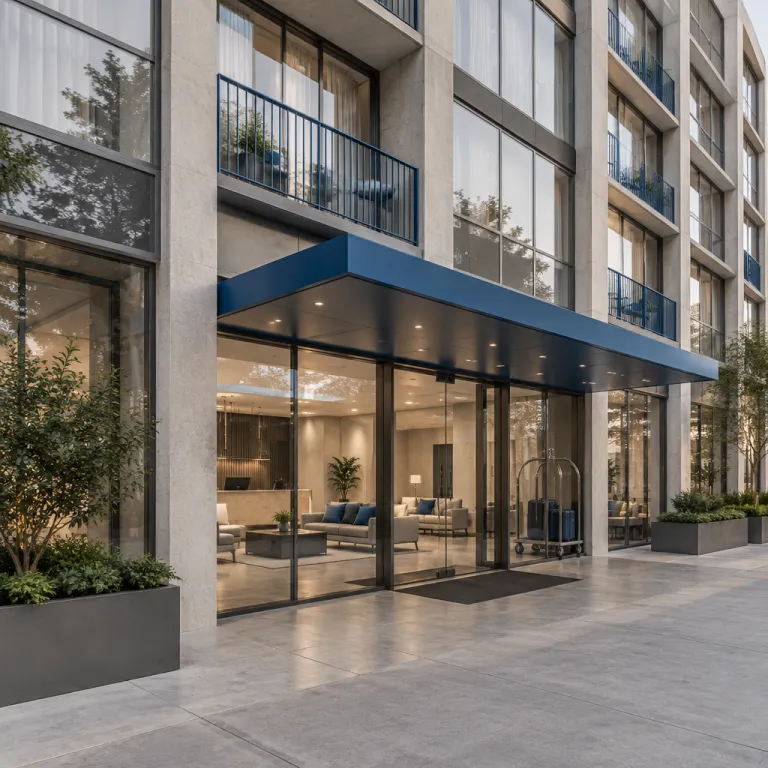
Office to hotel conversion as a value creation thesis
Office to hotel conversion has moved from niche strategy to mainstream underwriting theme. Record vacancy in office buildings across major United States business districts is colliding with constrained ground up hotel pipelines, creating a rare spread between replacement cost and acquisition pricing. For finance leaders, the key question is no longer whether converting office assets can work, but which buildings hotels can transform into durable cash flow without blowing up the pro forma.
The adaptive reuse play starts with the existing office asset, not with a generic hotel dream. Developers, real estate investors and asset managers now screen each office building on three filters that typically decide feasibility: physical layout, zoning and hospitality demand depth. When those align, office to hotel conversion projects can compress delivery timelines by 12 to 18 months versus new builds, which materially improves net present value and accelerates the path to stabilized hotel operations.
From a capital allocation perspective, office to hotel conversions require a different mindset than traditional development. You are not just arbitraging a weak office market into a stronger hospitality market; you are buying a specific building with embedded constraints that will shape guest experience, operational efficiency and long term exit liquidity. The investors who win are those who treat each existing office as a bespoke conversion project, with a value creation plan that links every euro of capex to a measurable uplift in net operating income.
Macro context, zoning evolution and capital markets signals
Office vacancy rates above 20% in several United States urban cores have created a pipeline of distressed and obsolete office buildings. Jones Lang LaSalle reported a national U.S. office vacancy rate of roughly 21% in early 2024, illustrating how deeply the traditional office market has been disrupted, especially in business districts that once relied on daily commuting. For hotel investors, this is not just a cyclical blip; it is a structural shift that is reshaping how buildings hotels can be financed, positioned and traded across cycles.
Municipalities facing hollowed out downtowns are increasingly open to office to hotel conversion and to residential conversions, using zoning relief, tax abatements and expedited permitting as tools. Local authorities understand that converting office buildings into hotels can support urban revitalization, increase hospitality tax receipts and stabilize surrounding real estate values. Asset managers should map which cities have formal adaptive reuse ordinances, which business districts offer density bonuses for hotel conversions, and where life safety and acoustic performance codes are being modernized to reflect existing buildings rather than only new construction.
Capital markets are already pricing this shift into hotel and office valuations. Public real estate investment trust moves, such as the luxury REIT exit analysed in this hotel public markets deep dive, show how investors reassess risk premia between asset classes when financing costs rise. For private equity funds and banks, the key is to underwrite office hotel conversion projects with conservative debt structures, realistic ramp up curves for business travel and leisure demand, and contingency buffers for code driven scope creep.
Technical feasibility: floor plates, systems and life safety
Not every office building can become a viable hotel, no matter how attractive the acquisition cost. Adaptive reuse in hospitality is constrained by hard physics: floor plate depth, structural grids, column spacing, window placement and elevator core locations all shape whether efficient guest room layouts are possible. As one industry reference puts it, “What is adaptive reuse in hospitality? Converting existing buildings into hotels.”
For a competitive office to hotel conversion, floor plates typically need a depth of roughly 18 to 20 metres from window line to core to allow double loaded corridors with 24 to 30 square metre keys. Older buildings with very deep office floor plates may require carving out interior light wells or accepting a mix of larger suites and smaller rooms, which impacts both design and cost per key. Mechanical, electrical and plumbing systems in existing office buildings also require careful assessment, because hotel operations demand higher domestic hot water loads, better acoustic performance between rooms and upgraded ventilation for hospitality grade indoor air quality.
Life safety and structural capacity are non negotiable filters for all conversion projects. Fire stair counts, egress distances and sprinkler coverage in an existing office often fall short of hotel code requirements, especially when adding more occupants per floor. Developers, architects and contractors must work closely with local authorities to reconcile hotel brand standards, guest experience expectations and life safety codes, while keeping the overall conversion budget within the target cost band of roughly 270 dollars per square foot cited by CBRE for hotel conversion benchmarks.
From underwriting to operations: brand fit, design and NOI
Once technical feasibility is confirmed, the investment story shifts from structure to income statement. Office to hotel conversion underwriting lives or dies on whether the building can host a brand and positioning that the market will reward with rate and occupancy. That means aligning the design of public spaces, room mix and back of house with the demand profile for business travel, leisure and group segments in that specific urban micro market.
Soft brands and conversion friendly flags have become powerful tools for converted hotels, especially where existing structural quirks make strict prototype compliance impossible. The competitive dynamics between collections, as analysed in this review of soft brand options for independent hotels, show how operators calibrate brand standards against the realities of older buildings. For finance directors, the key is to model how brand choice affects distribution costs, loyalty programme fees and achievable average daily rate, rather than chasing logo prestige.
Design decisions in office hotel conversions directly influence operational efficiency and guest satisfaction. Corridor lengths, lift placements and service elevator access determine labour productivity and the number of full time equivalents required per 100 keys, while acoustic performance between rooms shapes review scores and repeat business. Asset managers should build value creation plans that link specific capex items in conversion projects, such as façade upgrades or lobby reconfigurations, to measurable uplifts in revenue per available room, ancillary spend and long term EBITDA margin expansion.
Case patterns, risk management and long term asset strategy
Across the United States, a clear pattern is emerging in successful office to hotel conversion case studies. Winning projects typically target urban locations with constrained new supply, strong mixed demand from business travel and leisure, and municipal support for adaptive reuse. They also start with office buildings that already have favourable structural grids, generous ceiling heights and enough façade articulation to create a distinctive hospitality identity.
From a risk management perspective, investors should treat office to hotel conversions as complex real estate repositionings rather than simple refurbishments. Contingency allowances of 10 to 15% of total construction cost are prudent, given the surprises that older buildings can hide behind walls and slabs. In a typical underwriting example, a 200 key conversion with an all in budget of 300 000 dollars per key might be financed with 60% senior debt at 6.5% interest and 40% equity, targeting a stabilized average daily rate of 260 dollars, 72% occupancy by year three and a mid teens internal rate of return.
Long term, the most resilient converted hotels are those embedded in diversified business districts that blend offices, residential stock, retail and cultural venues. These assets can pivot between weekday corporate demand and weekend leisure, smoothing cash flows across cycles and supporting higher valuations at exit. For investors evaluating hotels share of a mixed use portfolio, office to hotel conversion assets can provide attractive yield, but only when underwritten with conservative assumptions on occupancy, cost inflation and future capital expenditure needs.
Frequently asked questions about office to hotel conversion
What is adaptive reuse in hospitality ?
Adaptive reuse in hospitality means converting existing buildings, such as an existing office or industrial structure, into hotels instead of constructing new properties. This approach reuses the building shell and core while redesigning interiors for guest rooms, public areas and back of house. It typically reduces construction cost, shortens delivery timelines and supports sustainable urban development.
Why convert offices to hotels instead of building new ones ?
Converting office buildings into hotels can be financially attractive when acquisition prices are below replacement cost and zoning supports hospitality use. Investors benefit from faster time to revenue, because conversion projects usually take less time than ground up construction. In markets with high office vacancy and strong hotel demand, this strategy can unlock value from underperforming real estate.
What challenges arise in office to hotel conversions ?
Key challenges include structural limitations, such as floor plate depth and column spacing, which affect room layouts and guest experience. Zoning regulations, life safety codes and acoustic performance requirements may require significant upgrades to older buildings, increasing total project cost. As the dataset notes, “What challenges arise in office-to-hotel conversions? Structural limitations and zoning regulations.”
How do investors evaluate whether an office building is suitable for conversion ?
Investors start by analysing location, demand drivers and competitive hotels in the market, then assess the physical characteristics of the office building. They review floor plates, window patterns, elevator cores and structural capacity to see whether efficient hotel designs are possible without excessive capex. Finally, they model different hotel conversion scenarios, stress testing occupancy, average daily rate and construction budgets to ensure acceptable returns.
Are office to hotel conversions always better than residential conversions ?
Office to hotel conversion is not automatically superior to residential conversions; the better option depends on local demand, zoning and capital markets. In some urban cores, hospitality demand and tax incentives make hotels more profitable, while in others, residential use may command higher values and lower operational risk. Sophisticated asset managers compare both paths for each existing office asset before committing to a strategy.